


New UATC Guidance Note to Help Document Misuse of Police Weapons in Protests
Protests and public gatherings are a vital part of any democratic society. Yet, in recent years, demonstrations around the world have too often been met with excessive force by law enforcement agencies – from batons and kinetic impact projectiles, to tear gas and projectile electric shock weapons. Such misuse of force not only chills free expression but can amount to torture or other ill-treatment.
Human rights and torture prevention civil society organisations, healthcare professionals, National Human Rights Institutions, National Preventive Mechanisms, and international human rights observers all play a key role in monitoring protests, documenting the misuse of weapons and equipment, and demanding accountability for victims and survivors.
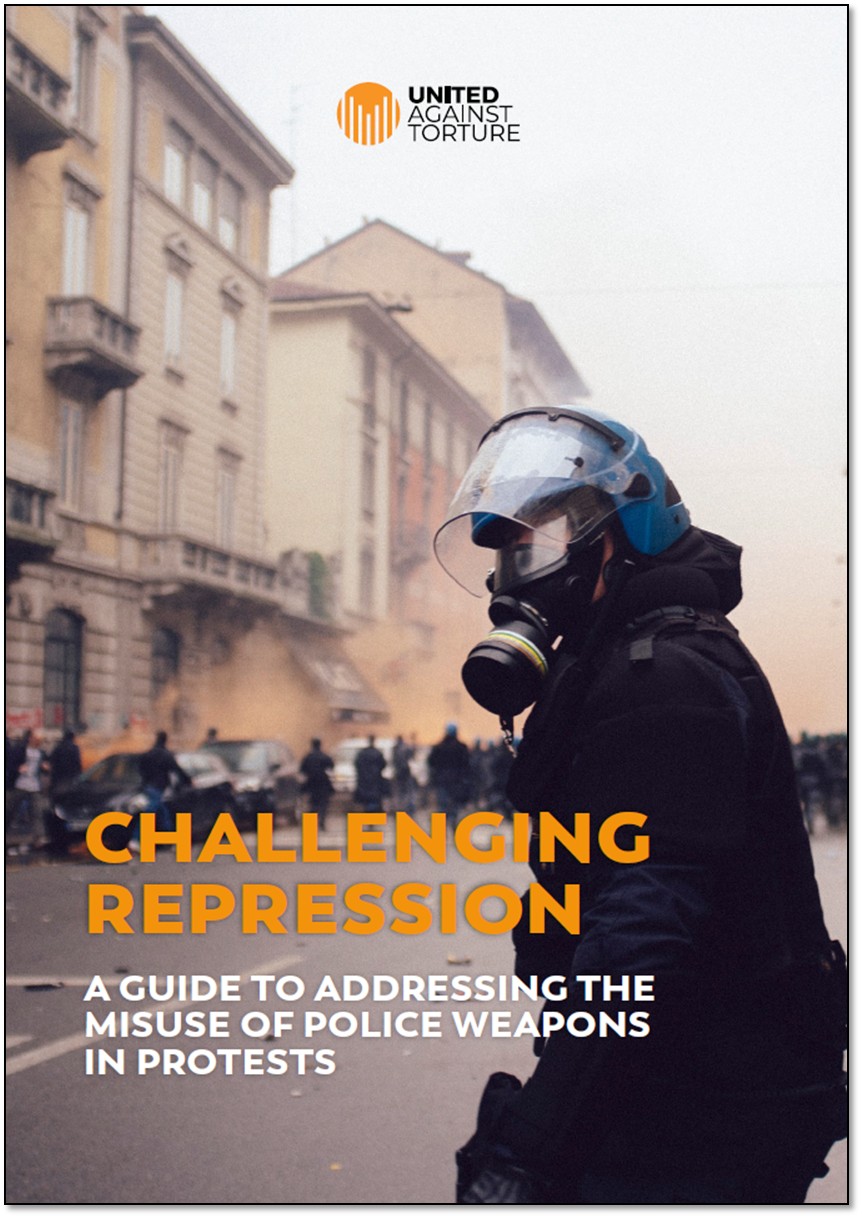
To support this work, the United Against Torture Consortium has released Challenging Repression: A Guide to Addressing the Misuse of Police Weapons in Protests, a practical tool for monitors working to safeguard the right to peaceful assembly. It gives monitors an accessible overview of the law enforcement weapons most commonly used against protesters, the risks they pose, and patterns of misuse. It also provides clear steps for identifying and documenting incidents, guidance on legal standards, and shows how to turn evidence into effective advocacy and accountability.
The Guidance Note is available in English with translated versions planned for 2026.
If you have any questions, please contact:
Dr Rebecca Shaw, Omega Research Foundation, rebecca@omegaresearchfoundation.org
This publication was funded by the European Union and produced under the United Against Torture Consortium (UATC). Its contents are the responsibility of the UATC and do not reflect the views of the European Union. The UATC pools the strengths and expertise of six leading anti-torture organisations (IRCT, OMCT, FIACAT, APT, Omega Research Foundation and REDRESS) in partnership with over 200 civil society organisations in more than 100 countries, to strengthen and expand the anti-torture movement.
 Protest Weapons Guidance Note (v.8).pdf Protest Weapons Guidance Note (v.8).pdf |