


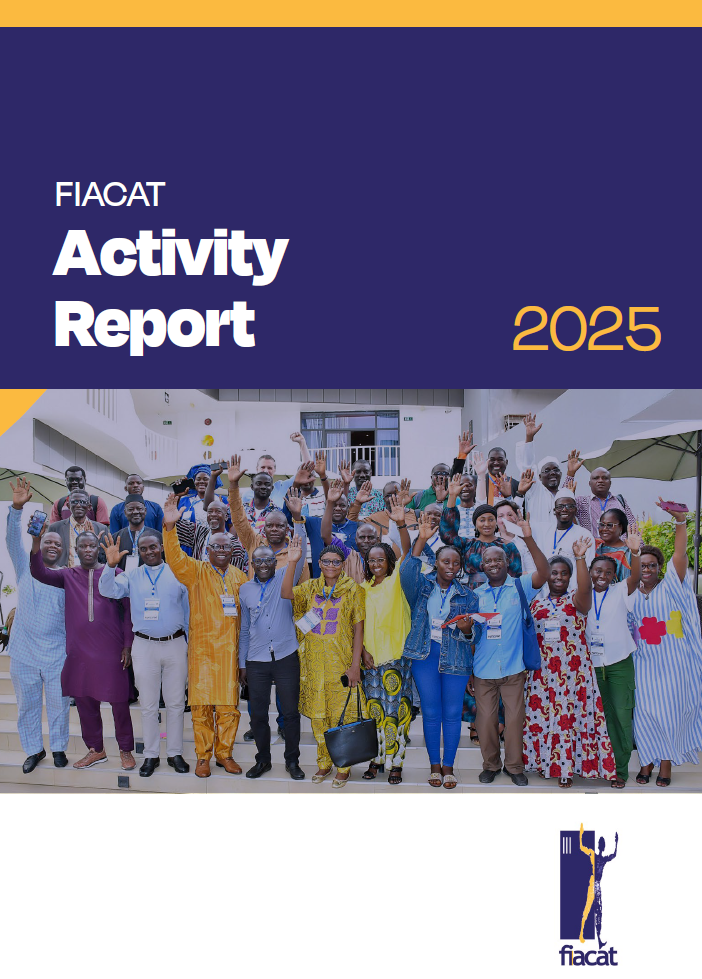

Consultation Workshop for Civil Society Organizations on the draft Model Anti-Torture Law for Africa
May 10, 2026
The Committee for the Prevention of Torture in Africa (CPTA) has drafted a draft model law on the criminalization of torture and cruel, inhuman, and degrading treatment, intended to guide African states in implementing and/or improving their national legislation regarding the prevention, prohibition, punishment, and redress for victims of torture and cruel, inhuman, and degrading treatment. This draft law has been prepared in English, French, and Portuguese.
On May 10, 2026, the CPTA, together with the Association for the Prevention of Torture (APT) and the International Federation of ACATs (FIACAT) as part of the United Against Torture Consortium (UATC), co-organized the first regional consultations on this draft law. Intended for civil society organizations, these discussions brought together some twenty representatives from organizations across several countries on the continent, including Burundi, Cameroon, Côte d’Ivoire, Congo, the Democratic Republic of the Congo, Benin, Madagascar, Togo, The Gambia, and Sudan, as well as several international non-governmental organizations.
The discussions began with a general presentation of the draft law by its drafters, followed by detailed exchanges on each provision of the text. Participants particularly emphasized the need to strengthen references to regional and international instruments, especially Article 5 of the African Charter on Human and Peoples’ Rights, in order to better anchor the model law within the African legal framework. Several discussions also focused on the definition of places of deprivation of liberty, with participants recommending that informal or unofficially recognized places be explicitly included, as well as any situation in which a person is not free to leave a location.
The debates also highlighted the importance of strengthening the fundamental safeguards afforded to persons deprived of their liberty. Several organizations thus advocated for the introduction of obligations regarding the recording of interrogations, the installation of cameras in police custody facilities, access to legal assistance, the right to remain silent, and the provision of information to detainees in a language they understand. Other discussions focused on the need to explicitly include sexual violence, enforced disappearances, and detention conditions within the scope of the model law, as well as on the role of civil society organizations in prevention and complaint mechanisms.
The drafters of the draft clarified certain legal choices made in the text, particularly regarding the structure of the draft, the definition of torture, and the distinction between state and non-state actors. They also indicated that several proposals made during the workshop would be taken into account in future versions of the text.
Following the discussions, it was agreed that civil society organizations could submit written contributions by the end of May 2026 for review by the drafters of the draft law. It was also announced that new consultations could be organized with national human rights institutions (NHRIs) and national mechanisms for the prevention of torture (NMPs) on the sidelines of the next session of the ACHPR in October 2026, prior to a validation phase by the States and with a view to adopting the model law in 2027.